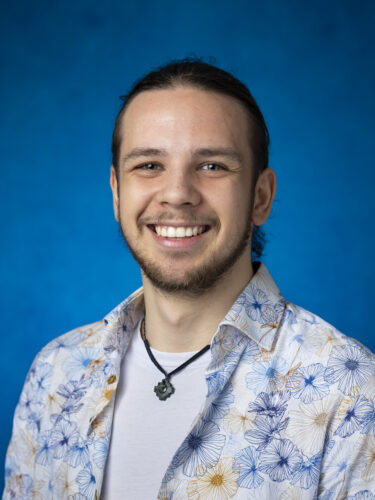
Jonas is 24 years old and from Germany
He did his BSc in Psychology at Tilburg University, with a major in Cognitive Neuropsychology, and a minor is Psychological Methods and Data Science
His main interests are: natural language processing, empathy, machine learning, functional magnetic resonance imaging
You can reach out to him on LinkedIn
What inspired you to pursue the IDA Master program?
I started my Bachelor’s degree at Tilburg University with the intention of pursuing a clinical education since I had some experience working in mental health clinics. However, during my studies, I was afraid of statistics and cognitive neuropsychology, which led me to pursue both of those fields. ‘Go beyond your fears whenever possible’, resonates with me a lot, I would say.
By now, I am deeply fascinated by science, and that’s why I chose IDA, as well as Tilburg as a whole. Living and studying here feels like a small epicenter where I can pursue scientific work and teaching already during my Bachelor’s and Master’s (thanks to many people, specifically from the MTO department).
In short, I chose IDA because I appreciate the individual lens we can take when looking at psychological issues and Tilburg as a whole due to its collaborative scientific community.
What motivates you to pursue this field of study, and what personal significance or purpose do you find in it?
Especially since the replication crisis, we need to develop psychology further. In other words, we as a science need to grow and I would like to take part in this.
Moreover, psychology is central to much of modern life—within and across families, cultures, and nations, for instance. I hope I can contribute in some way to understanding the complexity of human life.
Which field do you see yourself pursuing after completing the program?
Academia & Research
Looking at the program schedule, which courses are you most excited about and why?
I am mostly interested in the methodological subject since I feel like gaining methodological skills is the most relevant to tackle any question of interest. Furthermore, I am excited to work on the thesis.
Do you ever feel stressed or under pressure in your studies? How do you manage those challenges? Any tips to share?
Here I would like to quote a dear friend of mine:
“I rarely feel stressed in my studies. A few things that help me:
– realizing grades / exams are unimportant, it’s about learning,
– have a strong reason to complete the program and
– remind myself of the responsibility that we have to develop psychology into a strong productive science.” (Jari Zegers, Character Studies, 28th of September 2025)
What motivates you to keep going when things get tough?
I am lucky that I enjoy my work deeply; thus, there is just one path ahead—to keep going.
What do you enjoy most about collaborating with your peers, supervisors, or being part of the IDA community?
We are a tiny cohort, which allows us to build strong personal bonds as peers and friends.
Everyone seems very reflective and engaged while having expertise in quite different fields. Multidisciplinarity is represented among both students and supervisors. This is what I enjoy, and it helps me to broaden my perspective.
How would you describe your relationship with the faculty in the IDA program? How does this influence your learning experience?
Everyone is very approachable and open-minded. The flat hierarchies at Tilburg University in general are something I have appreciated ever since I started my Bachelor’s, and this continues throughout IDA. However, IDA takes this a step further, since we are a smaller group that can more easily have fruitful discussions as a whole.
How would you describe an “IDA student”? What common qualities do they share, and who do you think is best suited for this program?
An IDA student is curious and open-minded, I would say. To be able to finish the studies, being diligent and conscientious is also a high priority, since the workload can be quite demanding at times.
Be First to Comment